Bankston Group

Bankston lab logo

Building a Robust STEM Workforce

Welcome to the Bankston Group!

Our mission is to cultivate a robust STEM workforce through innovative and equitable research studies and training programs for students and early career researchers from all backgrounds. We are focused on traditional and non-traditional STEM pathways, and operate at the intersection of research, higher education and workforce development.

Contact Principal Investigator, Dr. Adriana Bankston if you have questions or would like to chat!

Adriana Bankston, Ph.D. is the Principal Biomedical Workforce & Policy Research Investigator of the Bankston Group. As the first-ever AAAS/ASGCT Congressional Policy Fellow, Adriana worked to support sustained federal research funding in the U.S. House of Representatives. Previously, Adriana supported scientific research and the future STEM pipeline as a Principal Legislative Analyst with University of California Federal Governmental Relations, where she advocated for the university’s research priorities. Prior to this role, Adriana advocated for federally funded research in neuroscience as a Policy & Advocacy Fellow with the Society for Neuroscience. She is also a member of the AAAS Section X Steering Group. In recognition of her work to support the U.S. scientific enterprise, Adriana was awarded the inaugural ARIS Emerging Broader Impacts Leader Award, and the Top 20 in 2022 Award For Excellence in Advocacy from The Advocacy Association. Adriana earned her PhD in Biochemistry, Cell and Developmental Biology from Emory University. 

Moraima Castro-Faix, Ph.D. is a Research Associate in the Bankston Group. She obtained her Ph.D. from the Learning Cognition and Development department at the Graduate School of Education at Rutgers University. She also holds an M.A. from Rutgers University in Science Education and a B.S. in Genetics from the University of Puerto Rico. During her dissertation research, she studied a learning progression in genetics at the middle school and high school level and has been involved in the design, implementation, and revision of a genetics curriculum for grades 7-12.  Work from these studies has been published in several top-tier journals in science education. Her interests are science education, science policy, and identifying the best practices for the development of the scientific workforce. Recently she participated in the National Center of Educational Statistics data institute at The American Institute for Research in which she studied the relationship between major changes and retention of at-risk students in STEM fields.

Siara Rouzer, Ph.D. is a Research Associate in the Bankston Group. She is a postdoctoral research fellow in the Department of Neuroscience & Experimental Therapeutics at Texas A&M University College of Medicine. A dedicated advocate for science policy and public education, she co-chairs the Public Outreach Committee and serves on the Advocacy Committee for the Research Society on Alcohol, where she promotes legislative initiatives to advance alcohol research funding and public health policy. She is also an active volunteer with the Texas FASD Network, a nonprofit organization dedicated to raising awareness and supporting individuals affected by Fetal Alcohol Spectrum Disorder. In recognition of her advocacy efforts, she received the John and Patricia O’Neill Addiction Science Education Award in 2022. Dr. Rouzer’s research explores the neurobehavioral and physiological effects of prenatal alcohol and cannabinoid exposures, with a focus on sex-specific outcomes. Committed to fostering inclusivity in STEM, she is passionate about mentorship and policy training as tools for empowering the next generation of scientists. She earned her Ph.D. in Behavioral Neuroscience from Binghamton University, NY.

Kassandra “Kass” Fernandez, M.S. (they/them) is a Research Associate in the Bankston Group and an Engineering Education PhD student at the University of Florida (UF). They hold a B.S. in Biological Sciences from Miami Dade College (MDC) & an M.S. in Microbiology & Cell Science from UF. They previously worked as a science teacher at Homestead Senior High School & as an adjunct Microbiology professor at MDC. Their research explores STEM undergraduate perceptions of mentorship and how mentoring experiences impact STEM undergraduate students’ professional formation. Outside of their research, they are involved in various service & leadership activities. They are currently serving their third & final term as President of the Policy Advocacy in Science and Engineering (PASE) student organization at UF, which they founded in 2022. They are also the lead web developer for the Scientist Network for Advancing Policy (SNAP), a coalition of early-career scientists dedicated to mobilizing for large-scale initiatives & bridging gaps between scientists, their communities, & the general public.

JP Flores, B.A. (he/him) is a Research Associate in the Bankston Group and a PhD Candidate in Bioinformatics & Computational Biology at UNC Chapel Hill studying the role of 3D chromatin structure in response to environmental stress and pursuing a Graduate Certificate in Innovation for the Public Good. He is the host of the From where does it STEM? podcast, senior editor for GeneBites, and recently completed a 6-month internship in the NIH Office of Science Policy in the NIH Office of the Director. He is an HHMI Gilliam Fellow passionate about bridging science and society and empowering others, especially those from minoritized and marginalized backgrounds.

Crystal Hammond, B.A. is an advocate for higher education. As a Research Associate in the Bankston Group, Crystal’s passion lies in addressing the pressing issues of educational policy, equity, and social justice. Previously, Crystal served as a research fellow at the Southern California College Attainment Network and interned at the University of California, Office of the President in Federal Government Relations. Her dedication to fostering positive change in education led her to earn a Bachelor’s degree in Public Policy from the University of California, Riverside.

Amy Ralston, B.S. is a Research Associate in the Bankston Group. She is a Ph.D. student in the Department of Physics & Astronomy at UC Irvine, holds an M.S. in Physics from UC Irvine, a dual B.S. in Physics and Astrophysics from University of Massachusetts Amherst, and an A.A. from Bard College at Simon’s Rock. Her research uses Hubble Space Telescope images and hydrodynamic simulations to reveal the mechanisms of star formation within the dense nodes of the Cosmic Web. Besides her academic work, Amy is passionate about employing techniques to approachably visualize and communicate data to drive evidence-based policy in the realms of space policy, science education, and climate change. At UC Irvine, she serves as the Vice President of the Science Policy and Advocacy Network, a National Science Policy Network Chapter.

(Former Group Member) Gwendolyn Bogard, B.S. was a Research Associate in the Bankston Group. She is a Government Relations Associate with the American Association for the Advancement of Science (AAAS) Office of Government Relations. Prior to joining AAAS, Gwendolyn worked in policy and communications at Research!America and interned with the House of Representatives Committee on Science, Space, and Technology. Gwendolyn earned her Bachelor’s degree in Chemistry from Southern Oregon University.

Call for Submissions: Initiative to Foster Biomedical Education Research Scholarship Project
Funded by the Burroughs Wellcome Fund, in partnership with the Graduate Career Consortium and the National Postdoctoral Association

Purpose: The Initiative to Foster Biomedical Education Research Scholarship (iBERS) Project aims to expand opportunities to engage with scholarship in graduate and postdoctoral training, to promote education research scholarship in the fields of biomedical education and training, and to enhance visibility and recognize the scholarly work of selected awardees. The iBERS Project supports current or prospective authors in publishing peer-reviewed manuscripts within the project scope. The funds are exclusively dedicated to covering publication costs in peer-reviewed journals, to be paid directly to the journal upon article acceptance.

Call for Applications: The iBERS Project invites applications from individuals and teams seeking support to advance the publication of biomedical education research. Prospective authors/teams may be led by faculty and/or staff (trainee co-authors are welcome) who support early career scientists across postsecondary biomedical research training pathways (e.g., BS, MS, PhD, MD/PHD) and seek to publish findings related to the education, training, and/or tracking of current and future graduate trainees and postdoctoral scholars. We especially encourage authors who are publishing in this area for the first time to apply to the funding call. Publications focused on themes of broad interest to those working in biomedical research and education could include, but are not limited to:

  • Educational and training program outcomes
  • Curriculum development and pedagogical innovation
  • Workforce development in biomedical research
  • Career and professional development strategies
  • Admissions, recruitment, and retention in biomedical and clinical training
  • Physician-scientist development and dual-degree program design
  • Faculty development, mentoring, and mentor training
  • Mental health, well-being, and trainee support
  • Building community, fostering belonging, and shaping professional identity
  • Cross-cutting issues that span biomedical and clinical training populations

This initiative seeks to support the publication of original research articles in the biomedical research and education space. Op-eds, viewpoints, commentaries, or perspectives are not eligible for award. A variety of methodologies (qualitative, quantitative, and mixed methods) that align with the research question may be utilized. Secondary data analyses or meta-analyses of publicly available datasets are also acceptable.

Application Deadlines: June 1, 2026; Sept 1, 2026; Dec 1, 2026; March 1, 2027

Eligibility Requirements: Applicants must have submitted a manuscript to a peer-reviewed journal at the time of application. Accepted peer-reviewed manuscripts will be given funding priority and submitted manuscripts with positive reviews will be considered. Submissions may be under review, in revision, or accepted (submissions with published preprints available preferred). Please include a preprint citation and link (if applicable). Funding is intended to support publication-related costs (e.g., article processing charges, publication fees, journal charges). Off-cycle publication funding requests may be considered on a case-by-case basis at the discretion of the steering committee – to submit, the same criteria considerations as for an on-cycle submission will be used for consideration. Publication fees must be paid directly to the journal (reimbursements are not possible).

Submit your manuscript here: https://forms.gle/1UjAKu3qrU8WVTi39

Information for Applicants/Awardees: Submissions will be accepted/funded until available funds are exhausted. Applicants will be accepted contingent upon successful peer-review and offer of publication from a peer-reviewed manuscript within scope. Published papers solely represent the views of the authors and do not represent the views of the iBERS steering committee or any affiliated/supporting organization. The iBERS Program will directly pay approved publication charges for the respective journal for the accepted authors’ manuscript. These are non-transferrable funds that can only be used to directly pay the approved publication costs of accepted applicants. Note that for awarded funds to be used, iBERS MUST pay the journal directly (NO REFUNDS CAN BE ISSUED). Authors, please DO NOT pay ahead, as reimbursements CANNOT be provided retroactively. Any unused funds of accepted applicants from prior submission rounds will be returned for use to the new applicant pool by the date of the next quarterly cycle submission – unless authors request an extension in writing, including evidence of positive reviews or acceptance pending. All accepted submissions will expire either in 3 months from the date of funding offer, or at the next quarterly cycle, whichever comes first – unless an exception/extension is submitted/approved by the iBERS steering committee. Applicants whose approval has expired are welcomed to reapply to be considered as a de novo application in the next quarterly cycle, and may be funded as long as funds remain available (but funds are not guaranteed if expiration date has already occurred).

*Note: Off-cycle publication funding requests may be considered on a case-by-case basis at the discretion of the steering committee – to submit, the same criteria considerations as for an on-cycle submission will be used for consideration.

For any questions, please reach out to the iBERS Steering Committee members. Additionally, if submitting off cycle, please email steering committee members to ensure the fastest possible response. 

Affiliations

Steering committee members represent a wide cross section of leading national initiatives and organizations supporting graduate and postdoctoral training and biomedical workforce development. Affiliations do not denote formal sponsorship for this project. 

1AAMC Group on Research, Education, and Training (GREAT)

2AAMC Group on Research Advancement and Development (GRAND)

3Advancing Research Impact in Society (ARIS)

4Burroughs Wellcome Fund & Career Guidance for Trainees (CGT)

5Future of Research

6Graduate Career Consortium

7National Postdoctoral Association

8NIH Broadening Experiences in Scientific Training Program

9National Association of Colleges and Employers (NACE)

† current leadership role

‡ former leadership role

# current or former member


Adriana Bankston 3†, 5‡, 6‡, 7‡

STEM Advocacy Institute

abankston81@gmail.com


Lindsey Cauthen 6†

Baylor College of Medicine, GCC

Lindsey.Cauthen@bcm.edu


Rebekah Layton 1†, 4, 6†, 7, 8

UNC Chapel Hill, GCC, AAMC GREAT Publication Working Group 

rlayton@unc.edu


CJ Neely 1, 4, 6‡, 7, 9

Federation of American Societies for Experimental Biology (FASEB)

cjn2336@gmail.com


Chris Smith 1†, 6‡, 7†, 8

Virginia Tech, NPA, AAMC GREAT Publication Working Group 

christsmith@vt.edu


Abby Stayart 1‡, 2†, 6†, 7‡, 8

University of Chicago

castayart@uchicago.edu

—————–

The Bankston Group’s three main pillars include: Research & Higher Education; Workforce Development; and Science Policy & Advocacy, which are interconnected. These pillars are addressed through research studies and training programs, as well as engagement, outreach and partnership development to advance group objectives. 

  • Building a Bridge Between Science and Society Through Science Policy: The Emerging Researchers National (ERN) Conference in STEM is aimed at college and university undergraduate and graduate students who participate in programs funded by the NSF EES Unit, including underrepresented minorities and persons with disabilities. During this session, we discussed science policy as a concept, science policy settings and job titles, and provided examples of policy impact in addition to discussing background on SRC and ways to get involved (2024).
  • Building the Future Science Policy Workforce Through Undergraduate Opportunities: This presentation was given at the Atlanta Conference in Science and Innovation Policy and described findings from the recent publication on the current landscape of science policy training for undergraduate students (2023).
  • Impacts of Science Funding Cuts on Early Career Researchers: Early career scientists are particularly impacted by the Trump administration’s actions in terms of their research prospects and science careers. This webinar covered these impacts, and additionally discussed why scientists are leaving and how to stop the brain drain, opportunities for mobilization and call to action, what we want the future of science to look like, and how to maintain America competitive in science and retain talent (2025).
  • Expanding Pathways into the Science Policy Workforce: Professional science policy opportunities have traditionally been filled by PhD-level students and established career-scientists. To expand science policy at the local, state, and federal-level, the science policy workforce must be expanded to include undergraduate STEMM students. The workshop was designed for early career researchers interested in exploring non-traditional career paths to science policy. The event was organized in partnership with JSPG, NSPN, SfN DCMA, ESEP Coalition and Student Pugwash (2022).
  • SciPol Starters: Expanding the Science Policy Workforce Through Nontraditional Career Pathways: The Bankston Group (formerly Bankston Lab)’s goal is to cultivate the next generation’s workforce in science policy through research and training programs for early career researchers from underrepresented backgrounds. This presentation included background on this issue and our initiatives on expanding science policy training opportunities and awareness at the undergraduate level presented at the Science Ethics and Policy Symposium 2022 (2022).
  • Expanding Pathways into the Science Policy Workforce: 2021 NSPN symposium & happy hour with NSPN and EPEP (2021).
  • Creating Actionable Change for STEM Education & Workforce Development: This event focused on ways to better support the next generation STEM workforce, help them achieve their potential in science and to utilize their talents to solve problems in society. We also discussed strategies that early career researchers can use to make improvements to the system. This event was organized in partnership with UC Irvine’s GPS-STEM and JSPG, with sponsorship from NSPN. Read the blog post (2021). 
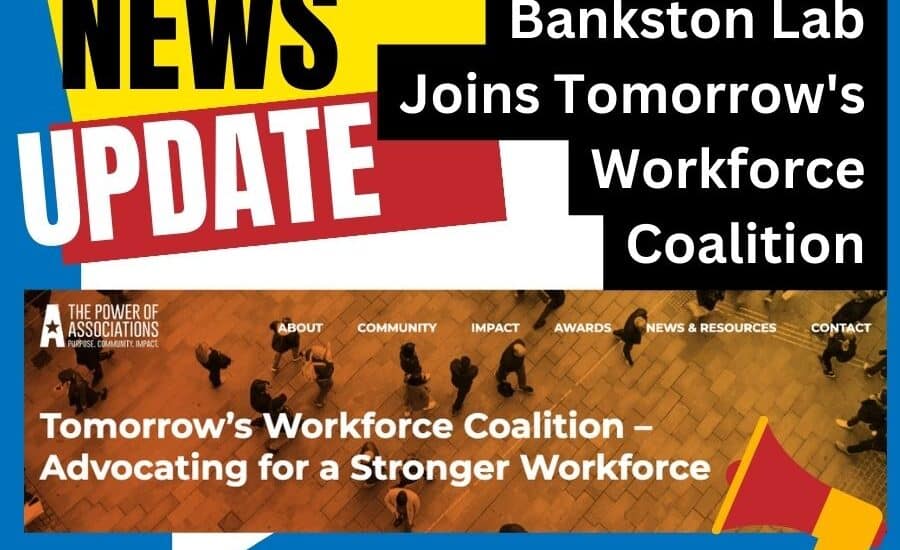
  • In September 2023, The Bankston Group (formerly Bankston Lab) joined Tomorrow’s Workforce Coalition on behalf of SAi. The Coalition advocates for beneficial workforce development policies that strengthen our economy, seeks to secure Senate and House cosponsors, and to advocate for the passage of the Freedom to Invest in Tomorrow’s Workforce Act. The Bankston Group (formerly Bankston Lab) joined the Coalition and endorsed the sign-on letter for the legislation to advance in the 118th Congress. Read more.
  • SAi Senior Resident and Principal Biomedical Workforce & Policy Research Investigator Dr. Adriana Bankston was selected as one of the 2022 Advancing Research Impact in Society (ARIS) Fellows. The ARIS fellows program is designed for professionals, researchers, faculty, educators, graduate students and others working to advance research impact practice. The 2022 class consisted of 13 fellows who are working on diverse projects to synthesize existing scholarly work and develop new scholarship to advance knowledge about research impact practices. Read more.
  • SAi Resident Scholar Adriana Bankston was previously appointed Senior Fellow in Civic Science & Public Policy with Sigma Xi in partnership with the Rita Allen Foundation. Bankston is a highly respected scholar passionate about developing the next-generation STEM workforce and advocating for the research enterprise. Read more.